
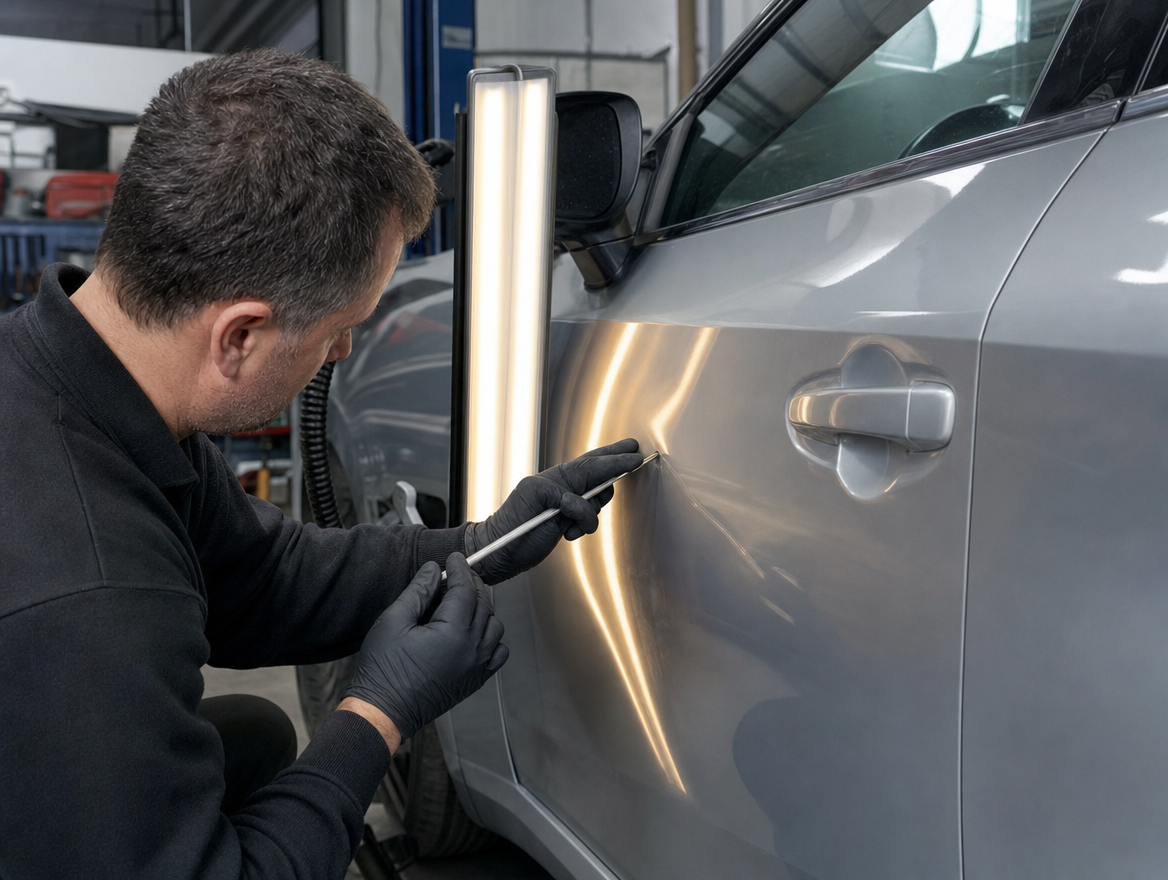
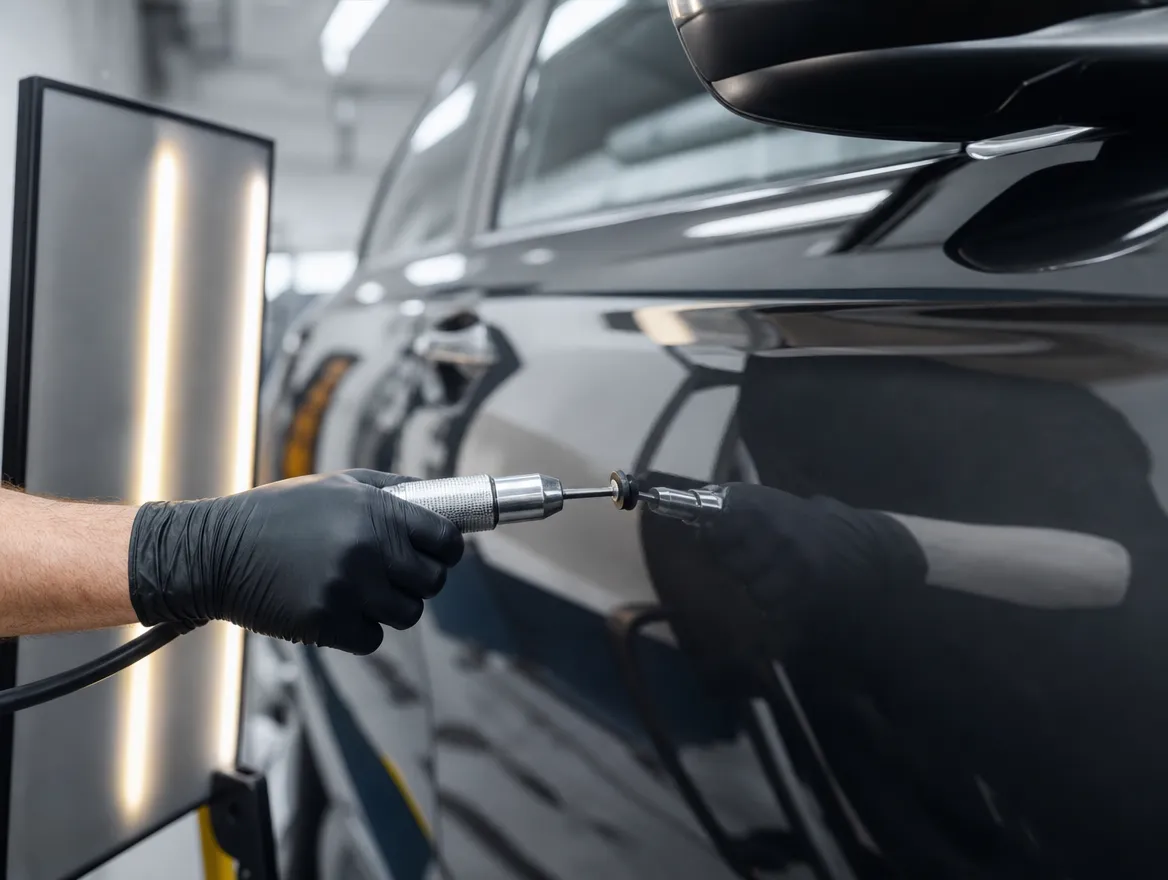
We reach behind the panel with rods and push the low area up in small stages, or pull it from outside with glue tabs, then tap the high spots flat.
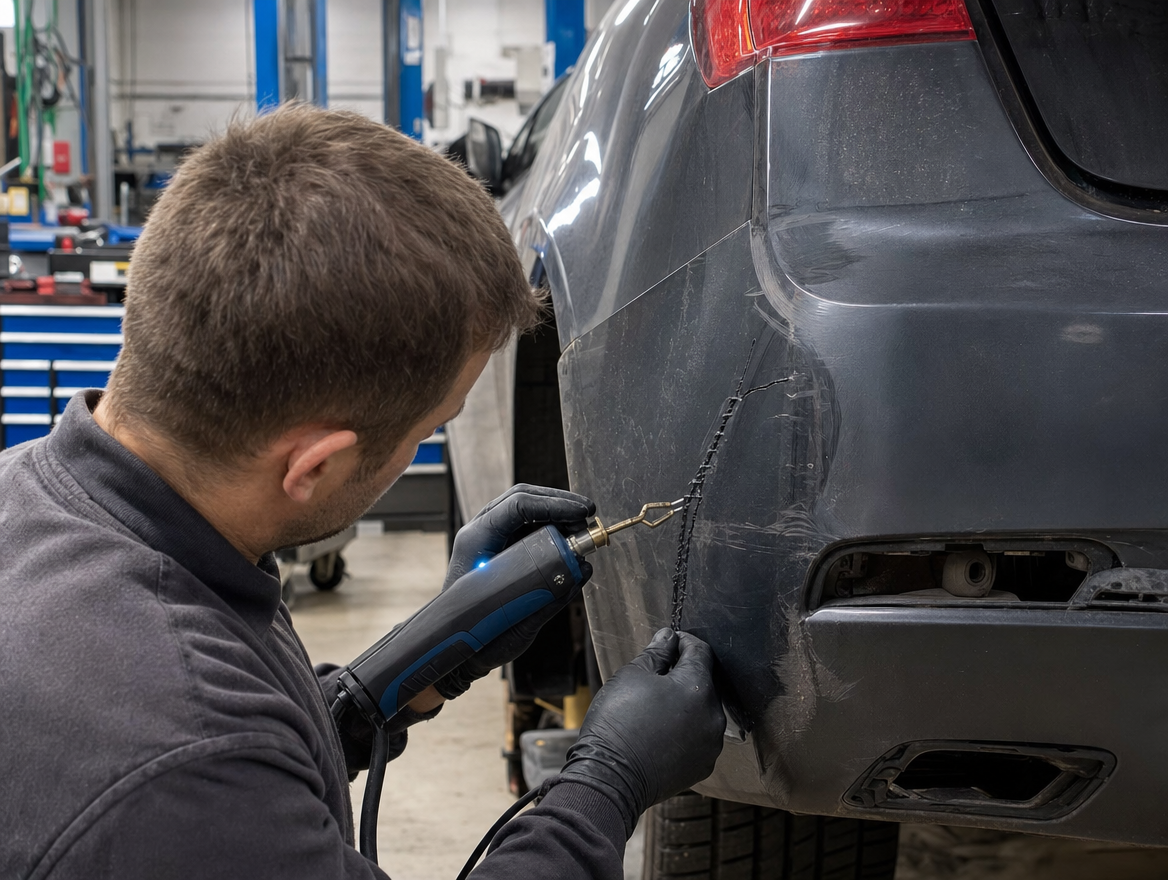
Once the paint is broken it stops being a dent job and becomes a paint repair, with filling, priming, colour matching and lacquer involved. That work is done in our spray booth.
Factory paint is applied in conditions no bodyshop can repeat, and a trade valuer can usually tell where a panel has been refinished. A dent taken out without paint leaves nothing to find. That is why we try paintless dent removal first, and say so plainly when it will not work.
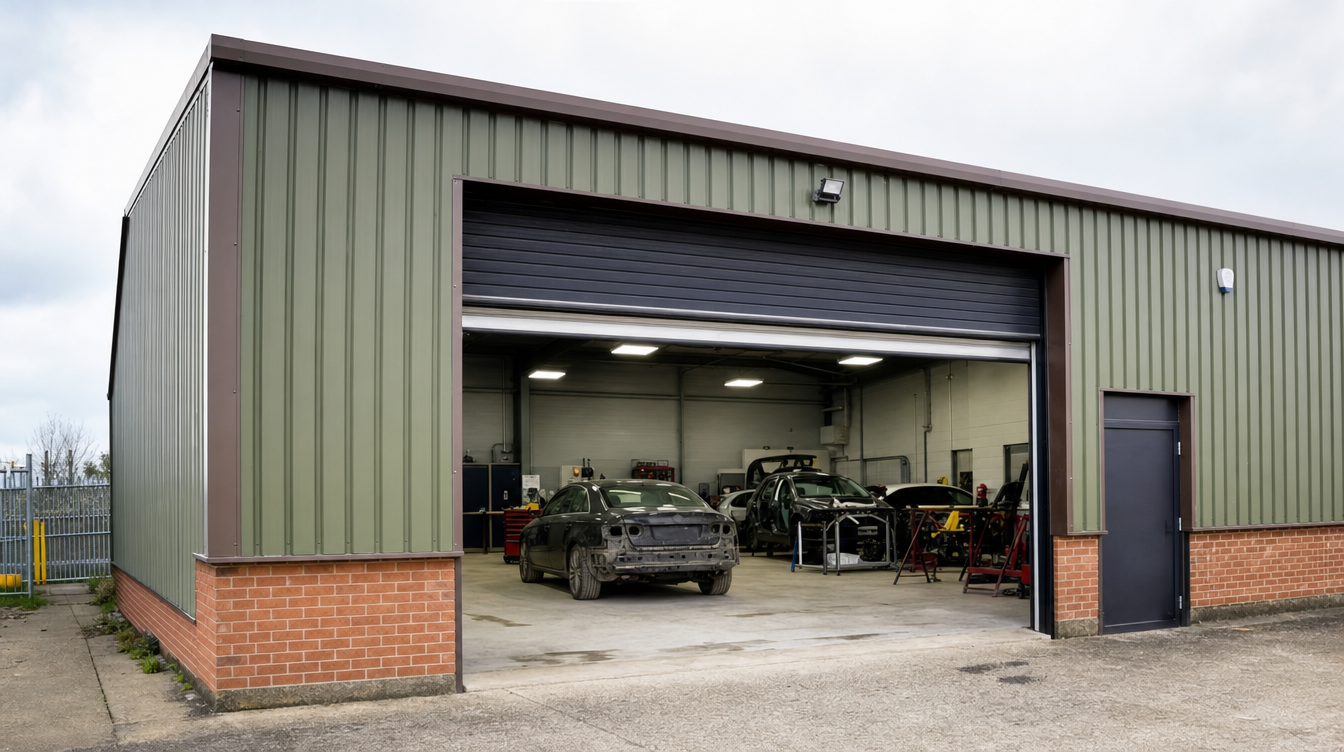
Every dent is done at our Bury St Edmunds workshop, where controlled lighting and proper access behind the panel let us see exactly what we are working on.

The size of the dent, where it sits, whether it lands on a crease and how easily we can reach behind the panel all play a part. Send a couple of photos on WhatsApp to 07939 755264 for a free, no obligation quote.
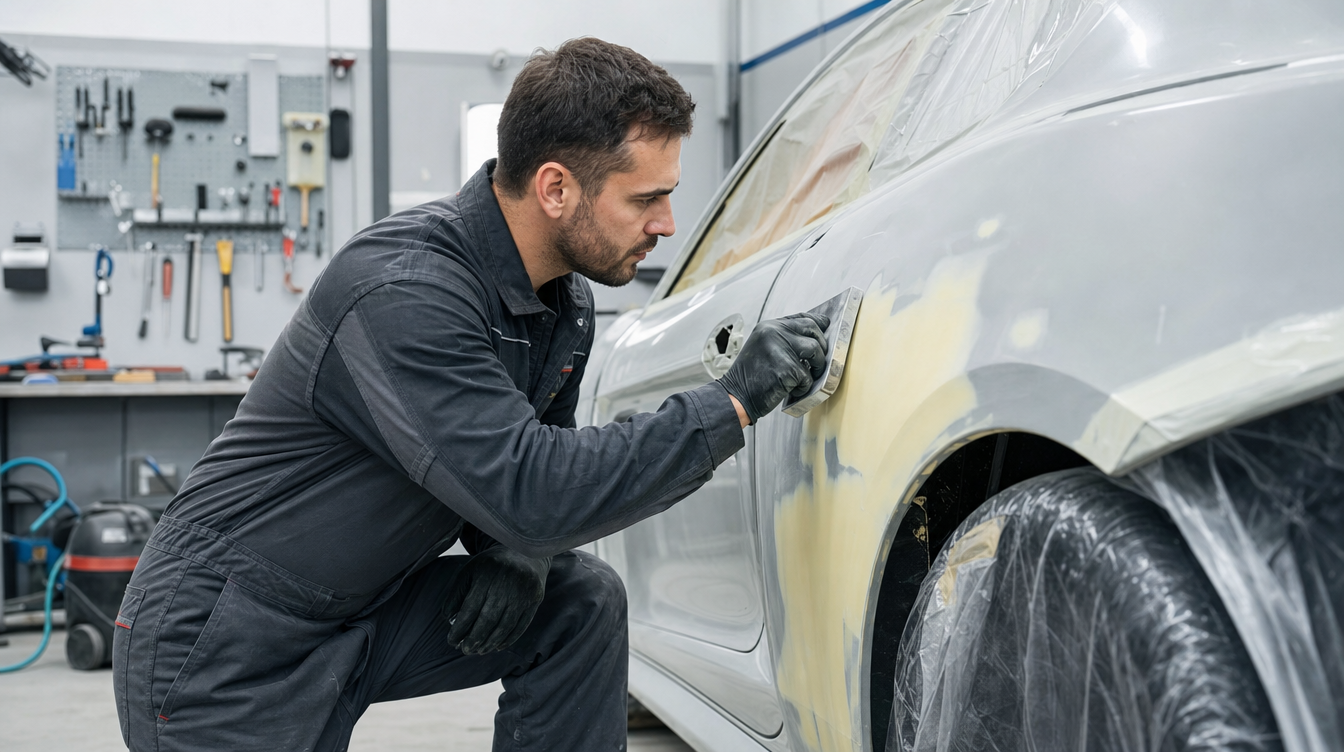
There are five situations where the honest answer is no. Cracked or chipped paint inside the dent. Metal stretched by a sharp impact. Dents on a swage line, sharp crease or panel edge, which have almost no give. Panels with no access behind them because of bracing, foam or bonded aluminium. And panels already resprayed, where glue pulling can lift the refinish. In those cases there is a middle route called push to paint, where we take out as much of the dent as we can so the filler stays thin, then finish it in the booth.

Door dings and car park dents in doors, wings and tailgates, typically anything up to around 75mm across with the paint still intact.

Shopping trolley knocks along the lower half of a door, and minor hail dimpling across a bonnet or roof.

End of lease returns and dealer forecourt prep, where a few small dents would otherwise cost you at inspection or knock money off the sale.
Door dings and trolley dents are quick to fix, which is why drivers from Bury St Edmunds, Mildenhall, Brandon and Newmarket often fit them in around work. Every town we cover is listed on the areas we serve page.
We only use one cookie, and that is to remember your choice here. We do not currently run analytics or advertising cookies; if we ever add any, they will only run if you accept. See our cookie policy and privacy policy.