
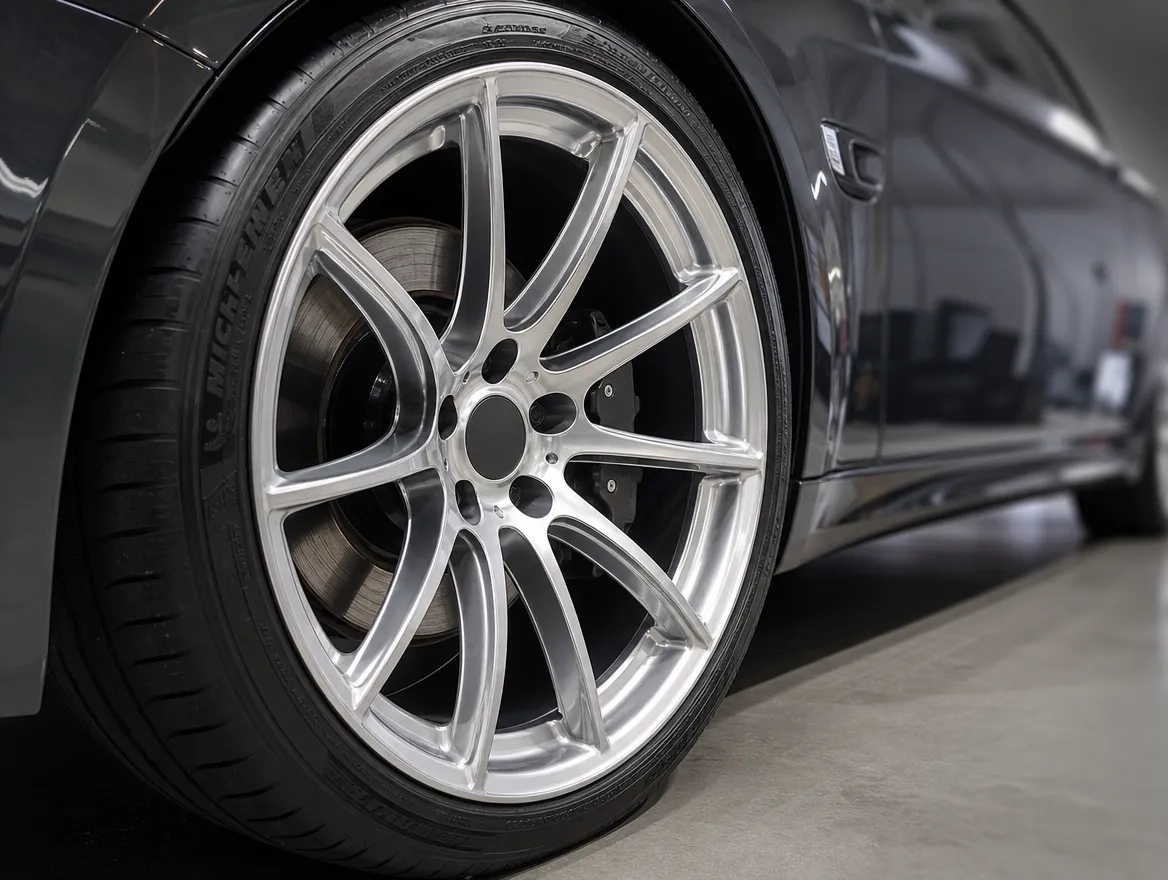
Kerbed rims, scuffed faces, light gouges, corroded or peeling lacquer and full colour changes, on a single wheel or a complete set.
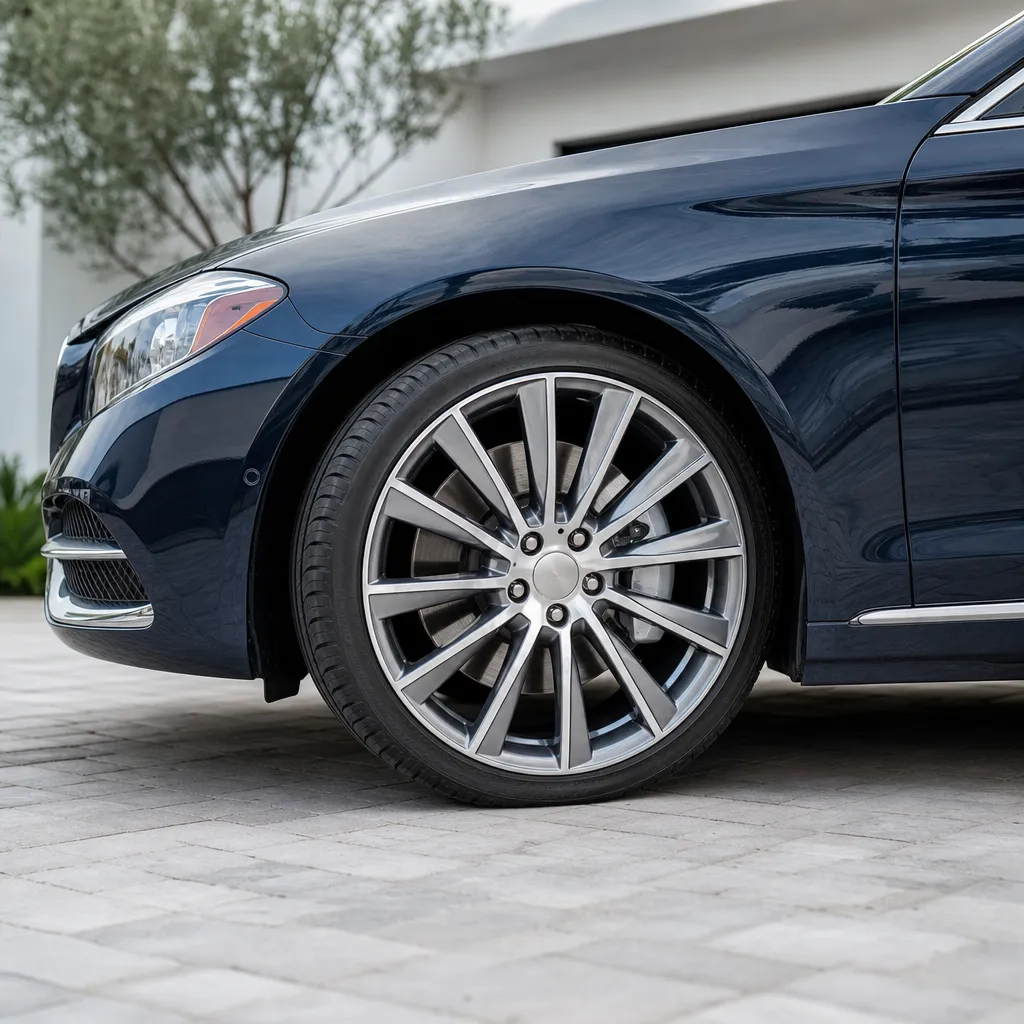
A cracked or buckled wheel is not safe to refinish, and we will tell you so plainly rather than take money for work that will not hold.
Plenty of customers want a different look rather than a repair. Gloss black, anthracite, gunmetal and satin finishes are the usual requests, to sharpen up a light coloured car or modernise an older set of wheels.
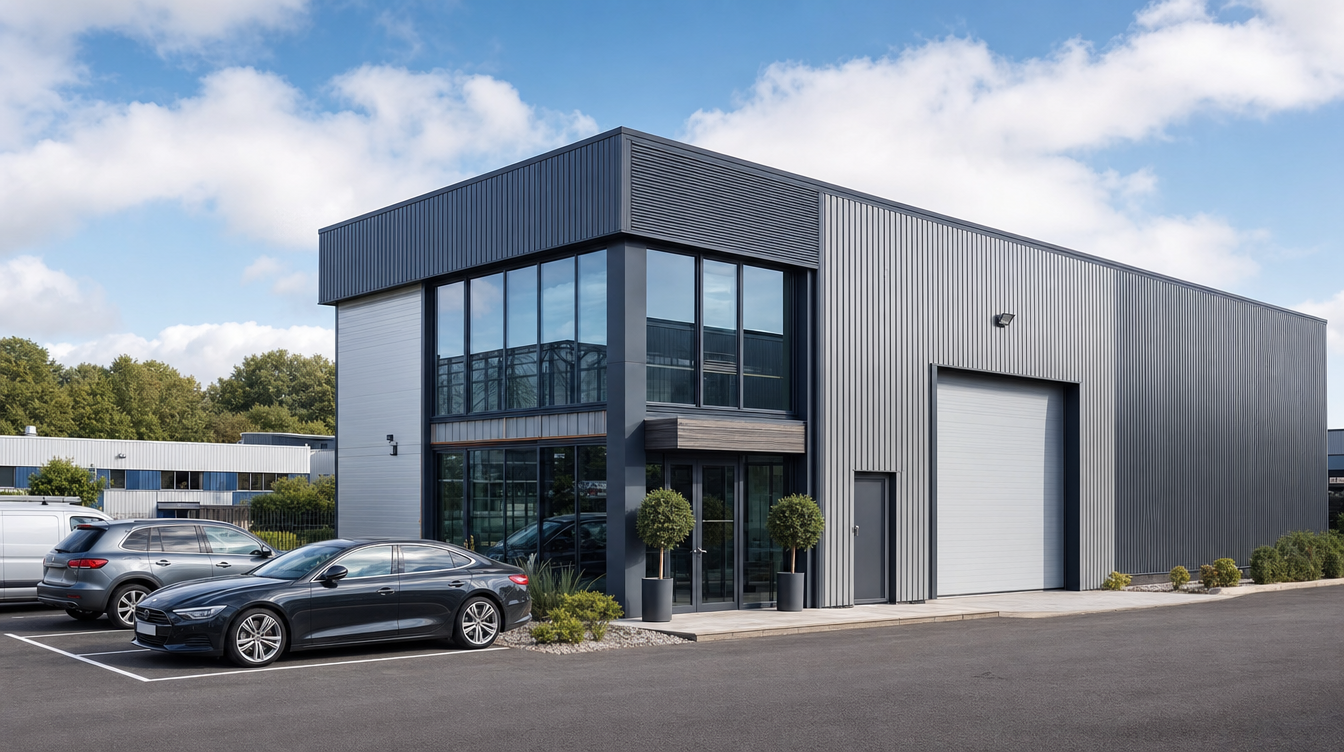
Wheels are prepared and sprayed in our booth, where temperature, airflow and moisture are controlled, because dust and damp in the air spoil lacquer as it cures.
How many wheels, what size, how deep the kerbing goes and whether you want a colour change. Send photos on WhatsApp to 07939 755264 for a free, no obligation quote.
Every wheel gets a proper look before anything happens to it. We check the rim edge for kerb damage, look for cracks and buckling, and see whether the lacquer has lifted or gone milky. Only then do we say what each wheel needs.

Most kerbing only breaks the lacquer and the outer rim edge, so the wheel rarely needs stripping right back to bare metal.

Deeper gouges are filled and shaped by hand until the rim edge runs straight again.

Diamond cut wheels are machined on a lathe, a different process from the painted refinish we carry out here.
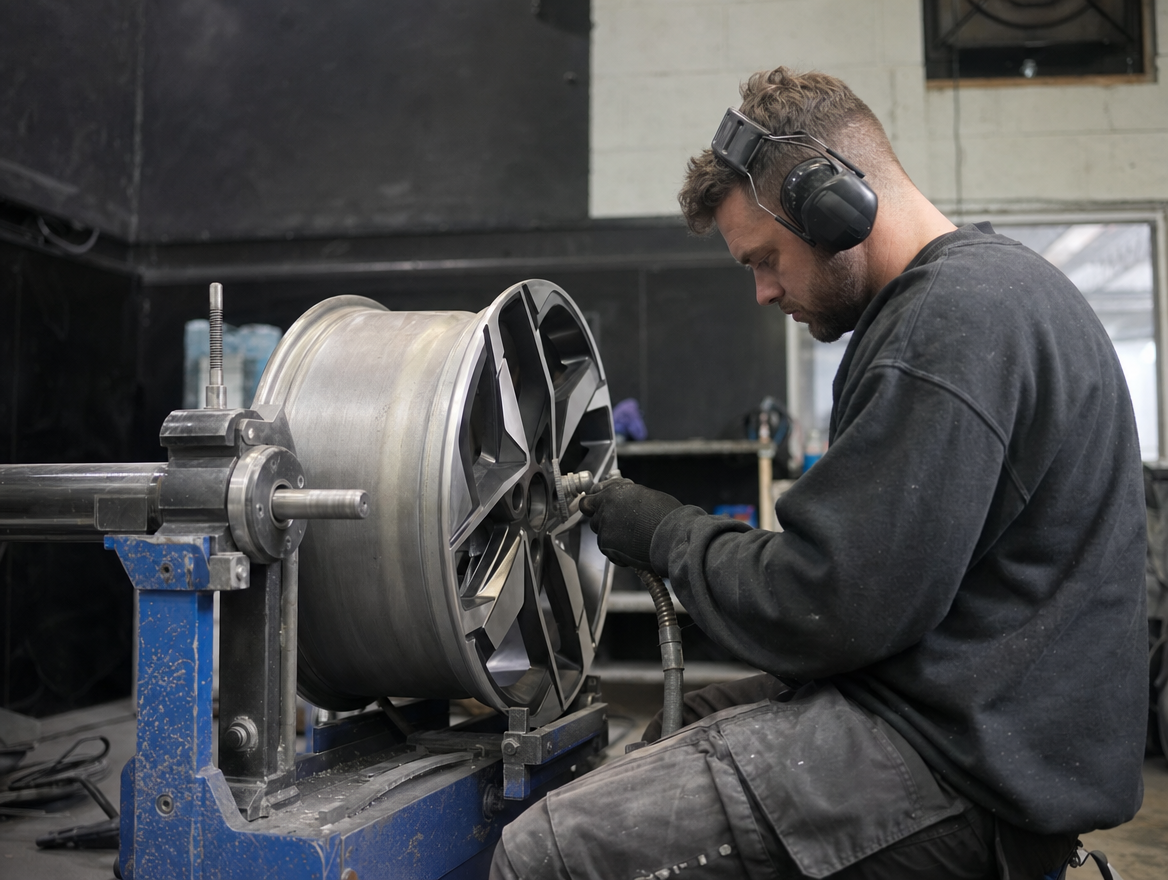
With the wheel off the car and the tyre masked, the damage is sanded back to sound material, gouges are filled and shaped, and the face is keyed so the new coating grips. Primer, colour and lacquer follow, then the wheel cures hard before it is refitted and balanced.

We give you a realistic timeframe when we quote, and we do not keep cars longer than we need to.
Wheels come off the car for a proper job, and tyres usually stay fitted unless the damage runs into the bead area.

Leave freshly painted wheels unwashed for the first day or so, so the lacquer can harden fully.
Kerbed a wheel or fancy a colour change? Send photos on WhatsApp to 07939 755264 for a free, no obligation quote.
Kerbed wheels come to us from all over the area, and a set of four is often refinished while you get on with your day. We see a lot of alloys from Newmarket, Ely and Haverhill, as well as Bury St Edmunds itself. Our areas we serve page has the journey times from each town.
We only use one cookie, and that is to remember your choice here. We do not currently run analytics or advertising cookies; if we ever add any, they will only run if you accept. See our cookie policy and privacy policy.